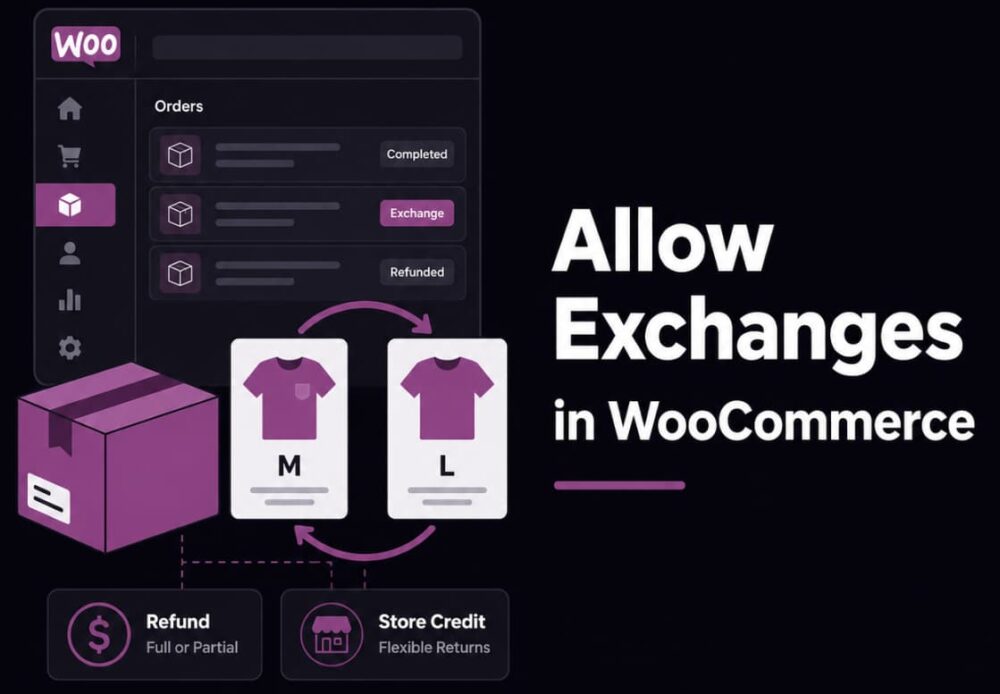
Learning how to allow exchanges in WooCommerce sounds like a customer service improvement. In reality, it is an operational decision. The moment a customer wants a different size, colour, variant, or replacement item instead of a refund, your store needs a workflow that protects stock accuracy, staff time, customer trust, and revenue.
Without a proper system, exchanges quickly become a patchwork of support emails, manual order edits, coupon codes, stock checks, and notes scattered across WooCommerce. It works for a handful of requests. It becomes fragile once your store is handling exchanges every week, or every day.
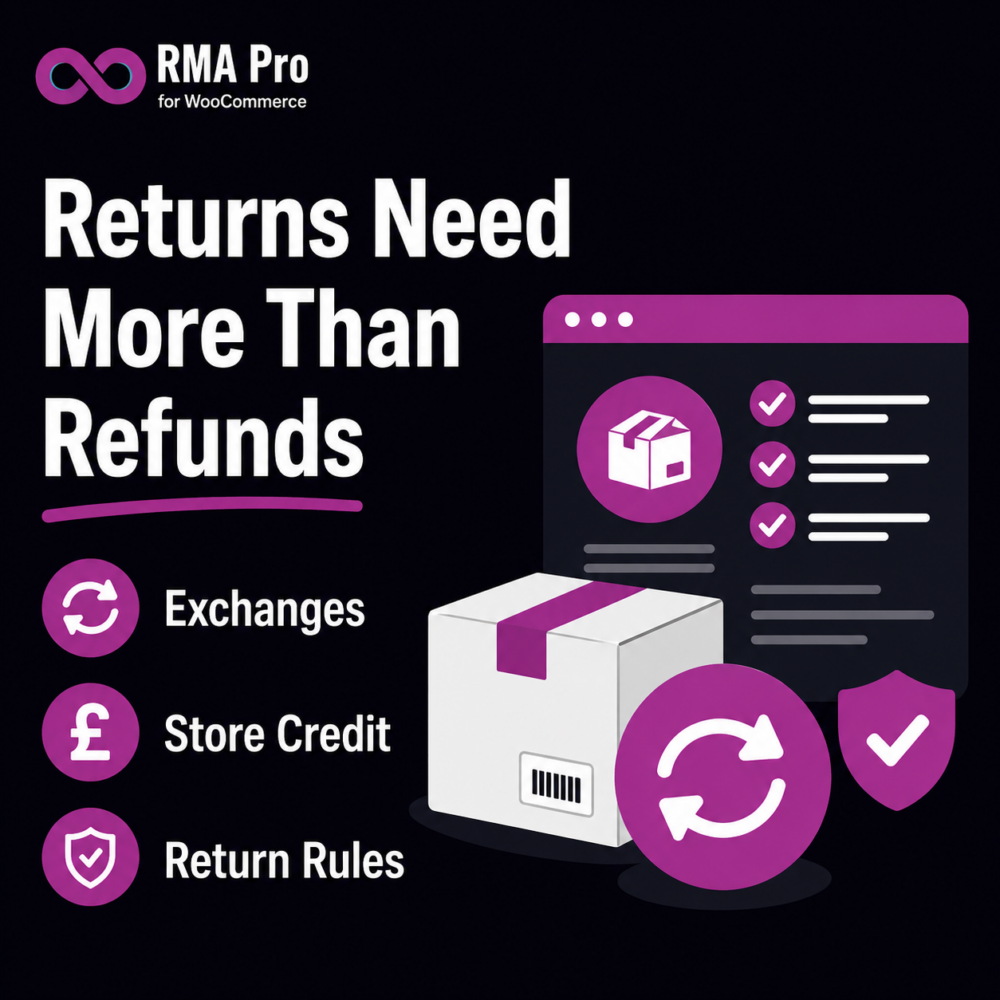
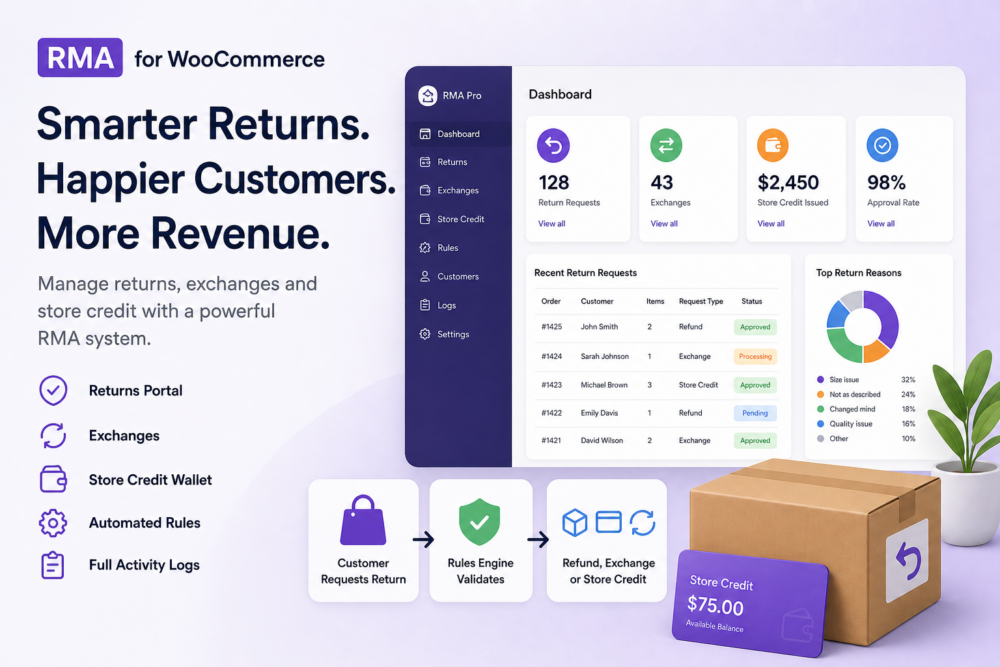
That is where a dedicated RMA Pro for WooCommerce workflow matters. Rather than treating an exchange as a refund with a side note, it lets stores manage exchanges as a proper post-purchase resolution, alongside refunds, store credit, rules, return windows, return labels, activity logs, and customer self-service.
If you want to offer store credit in WooCommerce, the first decision is not technical. It is commercial. Are you trying to retain revenue from returns? Issue goodwill credit after a service problem? Create a simple customer wallet balance? Give staff a controlled way to reward loyal customers? Store credit can help with all of those, but only when it is handled as part of a clear operational system rather than as a loose coupon workaround.
For many WooCommerce stores, store credit starts with returns. A customer is happy to buy again, but the current order was not right. Instead of sending money straight back out of the business, the store offers credit that can be used on a future order. Done well, that preserves revenue, encourages the next purchase, and gives the customer a fair alternative. But store credit is also useful beyond returns. With RMA Pro for WooCommerce, stores can also create manual wallet or store credit balances for customers, making it useful for goodwill gestures, account credits, corrections, and retention-led customer service.
If you are trying to manage returns in WooCommerce through emails, contact forms, order notes, and manual refund decisions, the problem usually appears manageable at first. Then order volume grows. Customers ask for exchanges instead of refunds. Someone wants to return one item from a bundle but keep another. A support agent approves something that should have been outside the return window. A refund is issued before the parcel is checked. Suddenly, returns are no longer a simple customer service task. They are an operational risk.
For serious WooCommerce stores, returns need structure. They need eligibility rules, a customer-facing portal, clear admin workflows, visibility of what happened, and options that protect revenue rather than pushing every request towards a refund. WooCommerce itself can process refunds from the order screen, but that is only one part of the returns process. A proper system also needs to manage the request before the refund, the decision path during review, and the commercial outcome afterwards. RMA Pro for WooCommerce is built for that wider job.
Returns management becomes a serious operational problem long before most WooCommerce stores realise it. What starts as a few refund requests quickly turns into admin overload, customer frustration, lost revenue, manual email chains, exchange confusion, abuse issues, and inconsistent policies.
That is usually the point where store owners start searching for a more advanced WooCommerce returns plugin and discover that many basic RMA systems simply do not scale well operationally.
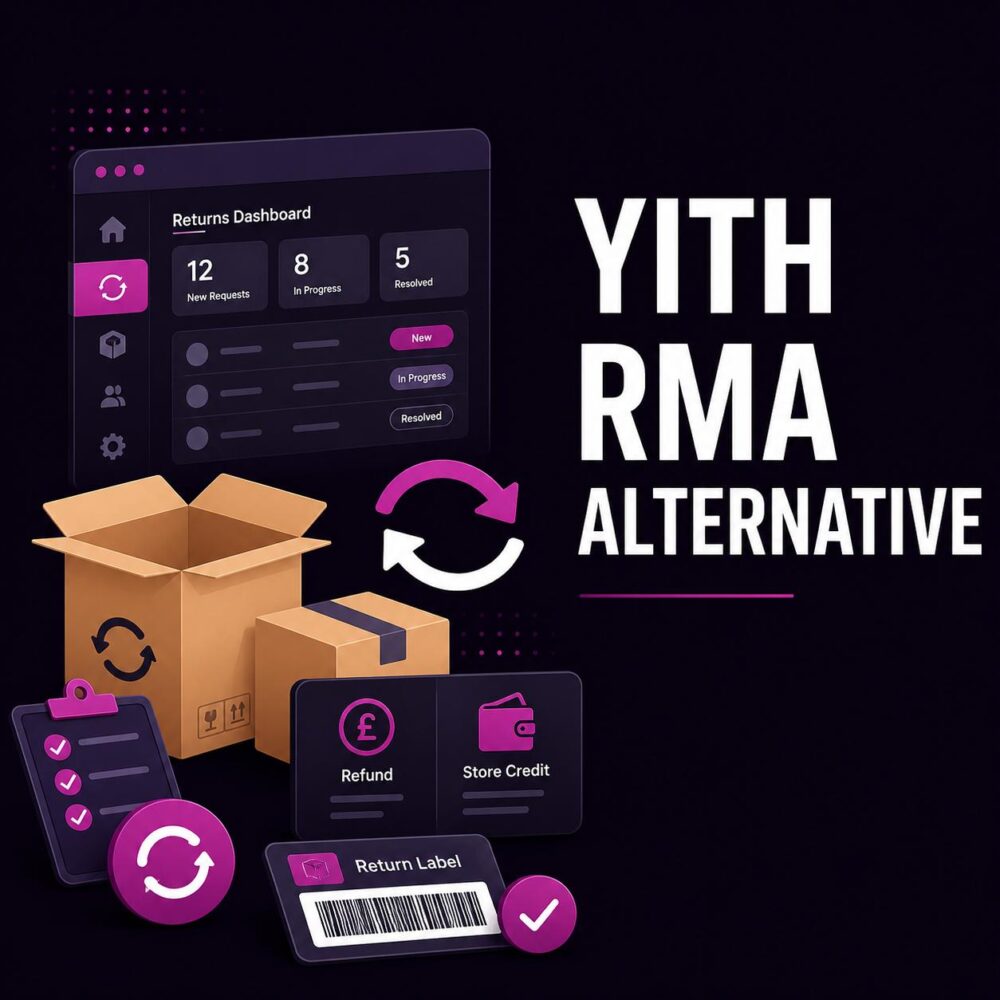
If you are currently looking for a YITH RMA alternative, there is a good chance you have already hit some of those limitations. Maybe you need better automation. Maybe you want exchanges instead of just refunds. Maybe your returns workflow has become difficult to manage internally. Or maybe your current system simply feels too rigid for the way your store actually operates.
For growing WooCommerce stores, returns are not just customer service tickets. They are operational workflows that directly affect revenue retention, admin time, customer satisfaction, and long-term profitability.
Returns are not just refunds. They are customer service, stock control, fraud prevention, retention, admin workload and operational process all wrapped into one. That is why serious WooCommerce stores need more than a basic return form.
Most WooCommerce store owners only realise their returns process is too basic when it starts costing them time, money and customer trust. A customer wants to exchange one item, refund another, upload evidence, ask about a label and use store credit on a future order. Meanwhile, the admin team is trying to track status updates, check eligibility, avoid abuse and keep the customer informed.
Many WooCommerce stores start with basic return processes using contact forms, emails, spreadsheets, or lightweight plugins. That might work when orders are low, but once a store grows, returns quickly become operationally expensive.
This guide covers 20 common WooCommerce returns problems ecommerce stores face and how a proper return management system helps solve them
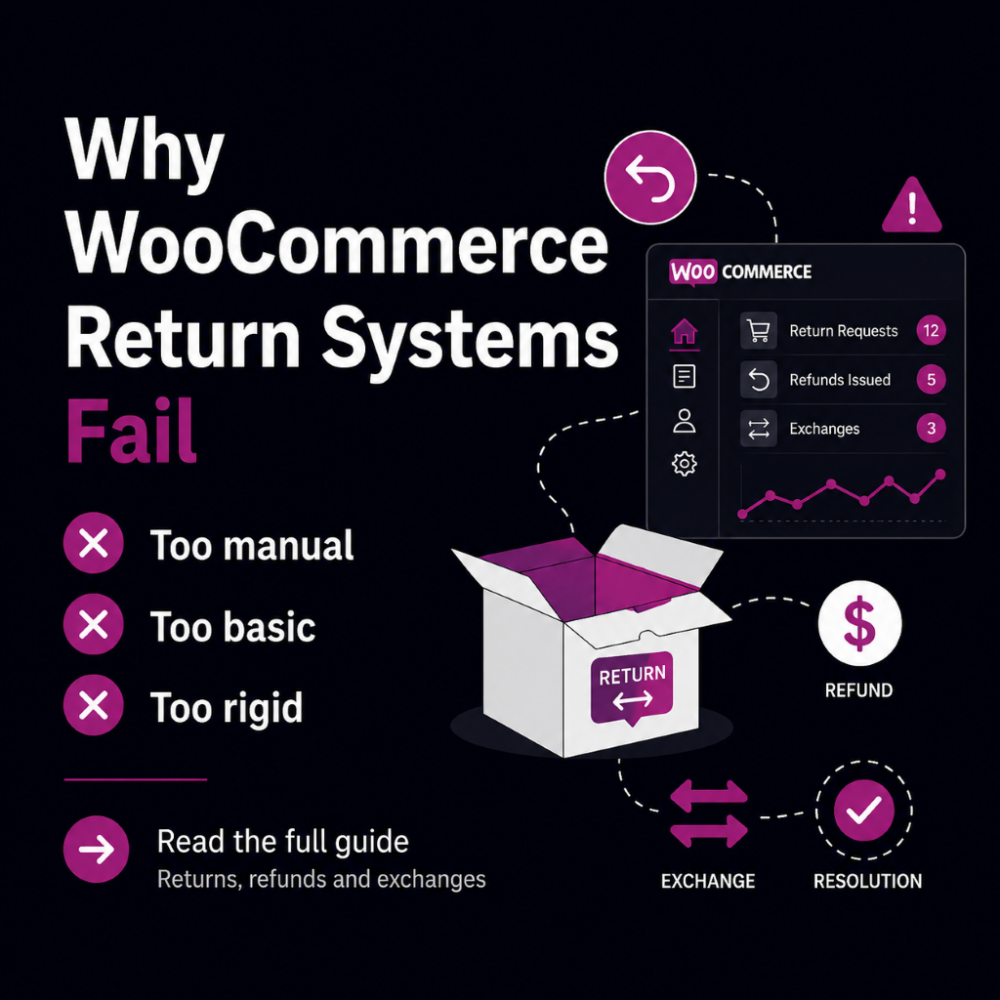
Why Most WooCommerce Return Systems Fail Store Owners
Returns are not just a customer service issue. For a WooCommerce store, they affect cash flow, stock accuracy, customer retention, admin time, fraud risk and repeat purchase behaviour.
The problem is that most WooCommerce return systems are built like simple request forms. They collect a message from the customer, maybe attach it to an order, and leave the store owner to work everything else out manually.
That might be fine for a small store getting one return a week. It does not work when you are handling exchanges, refunds, store credit, high-risk customers, international return windows and customer expectations at the same time.
A proper WooCommerce return system should help you control the return process, not just receive return requests.
Refunds are draining profit faster than most store owners realise
Most WooCommerce stores focus heavily on conversion rates, average order value, and advertising costs, but overlook one of the biggest profit leaks in ecommerce – returns handling.
When returns are handled badly, the damage goes far beyond the refunded order. You lose shipping costs, payment fees, staff time, packaging, stock value, and often the customer relationship itself.
The biggest question most stores eventually face is this: should you offer a full refund or encourage store credit instead?
The answer depends on your products, margins, customer behaviour, and how advanced your returns system is.
For many stores, store credit becomes significantly more profitable over time, but only if it is implemented properly.
RMA for WooCommerce – Fix Returns, Exchanges and Store Credit
If you are handling customer returns manually in WooCommerce, you already know the pain.
Customers email support. They want a mix of refunds and exchanges. You are checking policies manually. Every return becomes a one-off decision.
This is where most stores break. Not at sales – at returns.
Returns are operationally heavy, easy to abuse, and directly impact profit. Yet most stores are still running them through email threads, spreadsheets, or basic plugins that only cover refunds.
That is not a returns system. That is damage control.