
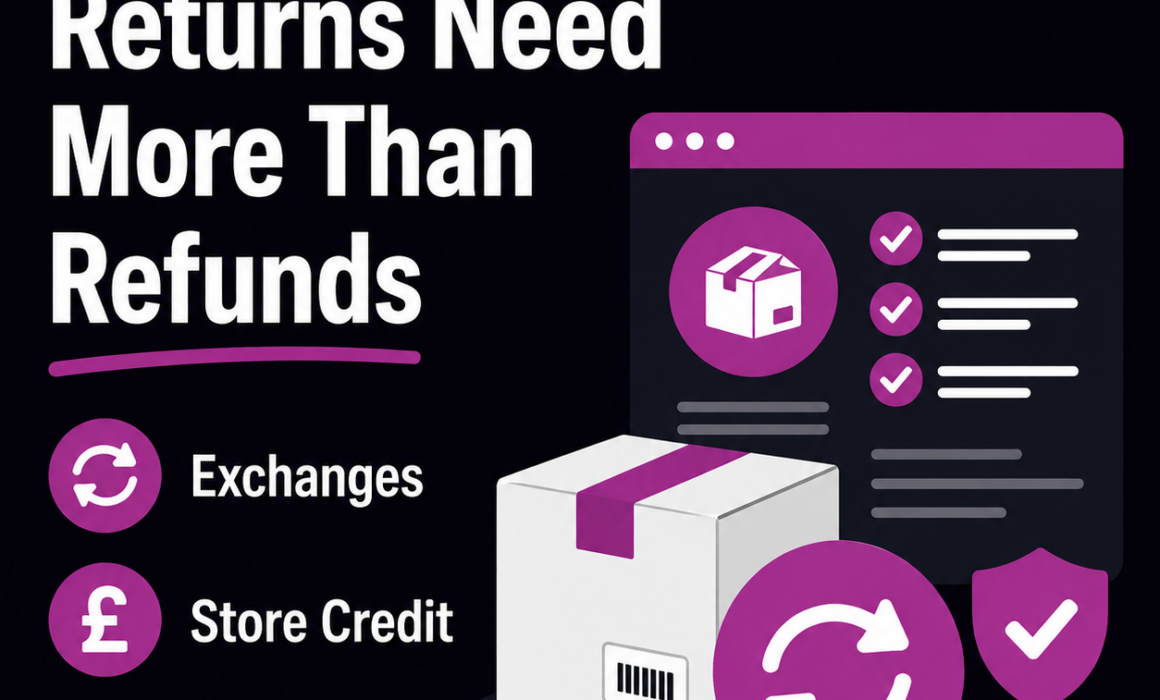
Why RMA Pro for WooCommerce Is One of the Most Complete Return Management Systems Available
Returns are not just refunds. They are customer service, stock control, fraud prevention, retention, admin workload and operational process all wrapped into one. That is why serious WooCommerce stores need more than a basic return form.
Most WooCommerce store owners only realise their returns process is too basic when it starts costing them time, money and customer trust. A customer wants to exchange one item, refund another, upload evidence, ask about a label and use store credit on a future order. Meanwhile, the admin team is trying to track status updates, check eligibility, avoid abuse and keep the customer informed.
That is where a proper return management system becomes important. A simple refund request form can work for a small store with very low return volume. But once returns become regular, varied or operationally sensitive, you need structure. You need return rules, customer-facing request flows, admin visibility, exchange handling, store credit, labels, audit trails and a process that does not collapse into email threads.
RMA Pro for WooCommerce is built for that exact problem. It is designed to give WooCommerce store owners a more complete way to manage returns, refunds, exchanges, store credit and return workflows from inside WordPress.
Key point: returns are not only a customer service task. They are an ecommerce operations problem. The stores that treat them properly usually have cleaner workflows, fewer admin mistakes and better retention opportunities.
Returns Are an Operational Problem, Not Just a Refund Problem
Many store owners think of returns as a simple transaction: customer sends item back, store sends money back. In reality, a return can touch almost every part of the business.
- Customer service needs to answer questions and keep the customer updated.
- Warehouse staff need to know what is coming back and why.
- Admin staff need to approve, reject, exchange, refund or credit the request.
- Finance needs clean records for refunds, credits and adjustments.
- Marketing needs to avoid losing customers who could have exchanged instead of refunded.
- Store owners need to prevent repeat abuse and policy misuse.
When returns are managed through emails, contact forms, spreadsheets or basic plugins, the process quickly becomes messy. One person may approve a return while another is still waiting for evidence. A refund may be issued when an exchange would have saved the sale. A customer may be told one thing by email and another in the order notes. A high-risk customer may keep making questionable requests because there is no rule-based control.
A strong WooCommerce return management system needs to bring all of this together in one workflow. That is the reason RMA Pro exists. It gives WooCommerce stores the tools to move returns out of scattered admin tasks and into a more controlled operational process.
Why Basic WooCommerce Returns Plugins Often Fall Short
Basic returns plugins can be useful when a store only needs a simple return request form. The problem is that many ecommerce stores outgrow that quickly. Once the store needs exchanges, store credit, return windows, label support, eligibility rules or activity tracking, a basic setup becomes a limitation.
For example, a simple plugin may let a customer submit a return request, but what happens if the customer wants to exchange one product and refund another in the same request? What happens if some products are excluded from returns? What happens if customers in different shipping zones need different return windows? What happens if VIP customers should have more flexible handling, but high-risk customers need tighter controls?
Those are not unusual edge cases. They are normal ecommerce scenarios. Clothing stores, accessory brands, beauty retailers, pet brands, homeware shops and many other WooCommerce businesses deal with these situations regularly.
This is where RMA Pro for WooCommerce is positioned differently from a basic return form plugin. It is not only about collecting a request. It is about managing the full RMA process in a way that supports real ecommerce operations.
Basic WooCommerce Returns Plugins vs RMA Pro
| Feature Area | Basic WooCommerce Returns Plugins | RMA Pro |
|---|---|---|
| Customer returns portal | Often limited to a simple form or basic request screen. | Provides a structured returns portal for customers to submit and track requests. |
| Refunds and exchanges | May only support refund-style returns or require manual handling. | Supports returns, refunds and exchanges as part of a more complete workflow. |
| Store credit | Often unavailable or disconnected from the return process. | Includes store credit support to help retain revenue and encourage future purchases. |
| Return rules | Usually basic, rigid or missing. | Uses rules to control eligibility, customer handling, return logic and abuse prevention. |
| Return windows by zone | Often applies one generic return window to all customers. | Supports more flexible return windows, including zone-based operational control. |
| Activity logs | May have limited visibility or rely on manual notes. | Provides activity visibility so admins can see what has happened during the request lifecycle. |
| Return labels and Shippo support | Often absent or requires a separate disconnected process. | Supports return label workflows and Shippo integration to help streamline fulfilment operations. |
| Operational scalability | Fine for small, low-volume stores but can become restrictive. | Designed for stores that need a more serious, structured and scalable return management process. |
The Returns Portal Improves the Customer Experience
Customers do not want to email support and wait for someone to explain the return process. They want a clear, self-service route that tells them what to do, what is eligible and what happens next.
A dedicated returns portal helps by giving customers a more structured experience. Instead of guessing whether they should contact support, reply to an order email or use a generic contact form, they can start the return process in the right place.
For WooCommerce stores, this matters because customer frustration often comes from uncertainty. A customer may not mind following your return policy, but they do mind unclear steps, slow replies and inconsistent information. A returns portal helps reduce that friction.
Clearer customer flow
Customers can submit their request through a dedicated route instead of relying on emails or generic contact forms.
Less support confusion
A structured portal reduces repetitive questions about how to return, exchange or request help.
Better brand experience
A professional return process makes the store feel more reliable, especially after a purchase has not gone to plan.
RMA Pro helps WooCommerce stores create this kind of return experience without forcing everything through manual support emails. That does not mean removing human judgement. It means giving both the customer and admin team a better starting point.
How RMA Pro Reduces Admin Workload
Return management can quietly consume a large amount of admin time. The work is often fragmented across order notes, customer emails, payment records, warehouse messages and support inboxes. Even when each individual return seems simple, the total workload grows quickly.
An admin team may need to check the order date, confirm which items are eligible, ask for evidence, approve a request, create an exchange, issue a refund, generate a label, record the decision and notify the customer. If that process is not centralised, mistakes become more likely.
RMA Pro helps reduce admin workload by creating a more organised process inside WooCommerce. It gives store owners and ecommerce managers a clearer place to handle return requests, review details and manage outcomes.
Common admin problems RMA Pro helps address
- Requests scattered across multiple email threads.
- Unclear return status or missing context.
- Manual checking of return windows and eligibility.
- Lost notes about why a decision was made.
- Too much manual handling for exchanges and store credit.
- Inconsistent customer communication.
The result is not just faster handling. It is also more consistent handling. That matters when multiple staff members are involved, or when the store owner needs to step back from handling every return personally.
Return Rules Help Control Eligibility and Prevent Abuse
Not every return should be treated the same. A good customer with a genuine issue is very different from a repeat abuser who regularly wears items, damages packaging, claims faults or pushes policy limits.
Basic return systems often treat all customers and orders the same. That can create problems. You may want to offer flexibility to VIP customers, but tighter controls for high-risk customers. You may want different rules for sale items, personalised products, international orders, final-sale products or specific product categories.
RMA Pro includes return rules so stores can build more operational control into the returns process. This is especially important for WooCommerce stores that sell products with varied return risk, different shipping zones or different customer types.
Scenario: high-risk customer controlled through rules
A store notices that one customer repeatedly buys multiple sizes, returns most of the order and claims faults without evidence. Instead of relying on staff memory, the store can use rules to apply stricter handling, require review or restrict certain return outcomes.
This does not mean punishing genuine customers. It means giving the store a way to control repeat behaviour that damages margin and admin efficiency.
VIP Customers Can Be Given More Flexible Return Handling
Return rules are not only about restriction. They can also be used to improve service for valuable customers. In ecommerce, the best customers often deserve a slightly different experience because they have already proven their value to the business.
For example, a VIP customer who orders regularly and rarely returns anything might be given an extended return window or a more flexible outcome. That can make commercial sense. Losing a strong repeat customer over a rigid return policy may cost more than accepting a controlled return.
Scenario: VIP customer receiving an extended return window
A loyal customer buys frequently and has a strong order history. Their return request arrives just outside the standard window. Instead of manually making exceptions every time, the store can use a more flexible rules-based approach for VIP handling.
This protects the customer relationship while keeping the process controlled and visible.
This is one reason an advanced returns system can be commercially useful. It helps the store make better decisions instead of forcing every customer into the same rigid route.
Exchanges Help Protect Revenue
One of the biggest mistakes stores make is treating every return as a lost sale. In many cases, the customer does not want to leave. They simply bought the wrong size, colour, model or variant.
If your process only makes refunds easy, you may be pushing customers towards revenue loss. A better process should make exchanges clear and manageable. That matters especially for fashion, footwear, accessories, pet products, gifts, homeware and any store where size, fit, colour or preference can drive return behaviour.
RMA Pro supports exchange workflows so WooCommerce stores have a better way to handle these requests. Instead of processing a refund by default, the store can keep the customer engaged and protect the original order value.
Scenario: mixed return with exchange and refund in one request
A customer orders three items:
- One item is the wrong size and needs exchanging.
- One item is unwanted and should be refunded.
- One item is being kept.
A basic return process may struggle with this because the request is not a simple full refund. A more complete return management system can help the admin team process the request more clearly, with the right outcome for each item.
For stores trying to protect revenue, exchanges are not a minor feature. They are part of retention and margin control. A customer who exchanges may still leave happy, while the store avoids losing the full value of the sale.
For more context on when to push exchanges rather than refunds, see [link to exchanges vs refunds].
Store Credit Improves Retention
Store credit can be a valuable alternative to a straight refund. It keeps money inside the business and gives the customer a reason to shop again. Used properly, it can turn a return into a future purchase rather than a complete loss.
This is not about forcing customers into poor outcomes. It is about giving the store more tools. Some customers may prefer credit if they know they will buy again. Some stores may offer credit as part of a goodwill resolution. Some return scenarios may be better handled with credit than cash refund, depending on the policy and circumstances.
Scenario: store credit used to retain revenue
A customer returns an item because the style was not right, but they like the brand and intend to order again. Instead of losing the customer through a refund-only process, the store offers store credit. The customer uses that credit on a future order and adds another item at the same time.
The return still happened, but the revenue was not fully lost. The customer stayed in the buying cycle.
RMA Pro includes store credit support as part of the wider RMA workflow. This makes it more useful than a plugin that only treats returns as refund requests. Store credit gives ecommerce teams another commercial lever to reduce the impact of returns.
For wider retention planning, see [link to store credit strategies].
Return Windows by Zone Give Stores More Operational Flexibility
A single return window is not always enough. Domestic and international orders may need different handling. Certain shipping zones may have longer transit times. Some customers may be affected by delivery delays that make a fixed return window unfair or impractical.
Return windows by zone give store owners more flexibility. Instead of using one blanket policy for every customer, a WooCommerce store can align the return process with its actual fulfilment and delivery realities.
This is useful for stores that sell across multiple regions, use different carriers or deal with different customer expectations by location. It also helps reduce manual exceptions because the rules can reflect the operational situation more accurately.
A return management system for WooCommerce should support that kind of flexibility. Ecommerce operations are rarely one-size-fits-all.
Activity Logs Improve Visibility and Accountability
When a return goes wrong, one of the first questions is usually: what happened?
Who approved the request? Was the customer notified? Was a label generated? Was the status changed? Was store credit issued? Did someone reject the request, and why?
Without activity logs, answering those questions can involve searching through emails, order notes, support tickets and staff messages. That wastes time and increases the risk of conflicting information.
Activity logs help provide visibility into the return process. They make it easier for admins to understand what has happened during the lifecycle of a request. This matters for accountability, support quality and internal training.
Why visibility matters
- Managers can review how returns are being handled.
- Support teams can see previous actions before replying to customers.
- Disputes can be investigated with more context.
- Repeated issues can be identified more easily.
- Operational mistakes are easier to spot and correct.
For serious WooCommerce stores, visibility is not optional. The more people involved in customer service and fulfilment, the more important logs become.
Return Labels and Shippo Support Help Streamline Workflow
Return labels are another area where a basic setup can become inefficient. If customers need to arrange their own postage, some will get confused. If staff need to manually create labels in a separate system, admin time increases. If label costs need to be handled inconsistently, finance and support workflows can become messy.
RMA Pro includes return label workflow support, including Shippo support. This helps stores bring label handling closer to the return request process rather than treating it as a completely separate task.
For ecommerce teams, the benefit is not only convenience. It is consistency. When label handling is part of a defined workflow, staff know what to do, customers get clearer instructions and the store has better control over the return journey.
This is especially useful for stores dealing with regular returns, exchanges, defective items, goodwill gestures or paid return labels.
Automation Matters as WooCommerce Stores Scale
Manual returns can work when you only receive a few requests a month. But as order volume grows, manual processes start to break down. The same small inefficiencies are repeated again and again.
A store processing five returns a month may manage with emails. A store processing fifty returns a month will feel the admin pressure. A store processing hundreds of returns needs proper systems.
Automation does not mean removing control. In returns, the best automation usually supports human decision-making. It helps apply rules, organise requests, surface information, trigger workflows and reduce repetitive admin. The store still decides its policy, but the system helps enforce it consistently.
| Manual Return Handling | Structured RMA Workflow |
|---|---|
| Customer emails support asking what to do. | Customer starts through a clear returns portal. |
| Staff manually check order dates and products. | Rules help guide eligibility and handling. |
| Exchange requests are handled manually. | Exchange workflows help protect revenue and reduce friction. |
| Store credit is awkward or disconnected. | Store credit becomes part of the return management process. |
| Admin history is scattered. | Activity logs give better visibility. |
Why RMA Pro Is Useful for Serious WooCommerce Stores
RMA Pro is most useful for stores that see returns as part of ecommerce operations, not just customer support. That includes stores that want to reduce admin workload, protect revenue, improve customer experience and prevent return policy abuse.
It is also useful for stores that have outgrown basic plugins. If you only need a contact form, a full return management system may be more than you need. But if you need returns, refunds, exchanges, store credit, rules, labels, zones, statuses and logs, then a more complete plugin makes sense.
Typical stores that benefit include:
- WooCommerce fashion stores handling size exchanges and partial returns.
- Accessory brands dealing with variant swaps, refunds and customer-specific handling.
- Pet product stores managing customer service, exchanges and operational returns.
- Homeware stores with bulky returns and label requirements.
- Stores with VIP customers, repeat customers or high-risk return patterns.
- Growing ecommerce brands that need less manual admin and more process control.
For a broader guide to return process planning, see [link to returns guide]. For a comparison of plugin options, see [link to WooCommerce returns plugins].
What Makes a Complete WooCommerce Return Management System?
A complete return management system should do more than collect requests. It should support the full lifecycle of the return from customer submission through to admin resolution.
That means it should help answer practical questions such as:
- Can the customer submit the request easily?
- Can the store control eligibility?
- Can the admin team review and manage the request clearly?
- Can the store process different outcomes, including refunds, exchanges and credit?
- Can the store handle return labels where needed?
- Can the business see what happened later?
- Can the process scale without relying on memory and manual checking?
RMA Pro addresses these areas by combining the features WooCommerce stores usually need once returns become operationally important. That is why it is fair to describe it as one of the most complete return management systems available for WooCommerce.
Practical Example: How a More Complete RMA Workflow Helps
Imagine a WooCommerce clothing store receives a return request from a customer who bought four items. One item is too small and should be exchanged. One item is unwanted and should be refunded. One item is outside the standard return window. One item is being kept.
In a basic setup, this likely becomes an email chain. Staff need to confirm the order, work out which items are eligible, decide what to do about the late item, manually create an exchange, process the refund and keep notes somewhere.
In a more structured RMA workflow, the customer starts through the returns portal. The admin team reviews the request in a dedicated area. Rules help control eligibility. The exchange can be handled as part of the return process. Store credit can be used where appropriate. Activity logs provide visibility. Labels can be managed as part of the wider workflow.
The same return still needs judgement, but the process is cleaner. There is less room for missed information, inconsistent replies or avoidable admin time.
Returns Can Damage Profit if They Are Poorly Managed
Returns affect profit in several ways. The obvious cost is the refund itself, but that is only one part of the picture. There may also be shipping cost, payment fees, packaging loss, staff time, inventory delays, damaged goods, discount misuse and lost future sales.
A poor returns process can also damage customer trust. If a customer has a frustrating return experience, they may not buy again. Worse, they may leave a negative review even if the original product issue was minor.
Good return management helps reduce those risks. It does not eliminate returns, but it gives the store more control over how returns are handled. That control can improve customer satisfaction, reduce admin burden and support better commercial outcomes.
RMA Pro Is Built Around Real WooCommerce Operations
The main strength of RMA Pro is that it is built around practical ecommerce needs. It recognises that WooCommerce stores often need more than a basic return button. They need a system that can support different outcomes, customer types, return rules, store credit and operational visibility.
That practical focus is important. A returns plugin should not just look good in a feature list. It should help with the daily reality of running an online store. That means reducing repetitive admin, making customer requests easier to manage and giving the business more control.
For store owners who are still handling returns manually, RMA Pro can provide structure. For stores using a basic plugin that no longer fits, it can provide a more complete upgrade path. For ecommerce managers who need visibility, it can make the returns process easier to review and improve.
Final Thoughts
Returns are part of ecommerce, but they do not have to be chaotic. The difference between a basic return process and a proper RMA system is control. A good system helps customers submit requests clearly, helps admins manage outcomes efficiently and helps the business protect revenue where possible.
RMA Pro for WooCommerce brings together returns, refunds, exchanges, store credit, rules, labels, return windows and activity logs in one WooCommerce-focused workflow. That makes it a strong option for stores that need more than a simple return form.
If your WooCommerce store is growing, dealing with more return requests or trying to build a more professional post-purchase experience, explore RMA Pro for WooCommerce and see how it can help you create a more complete return management process.