
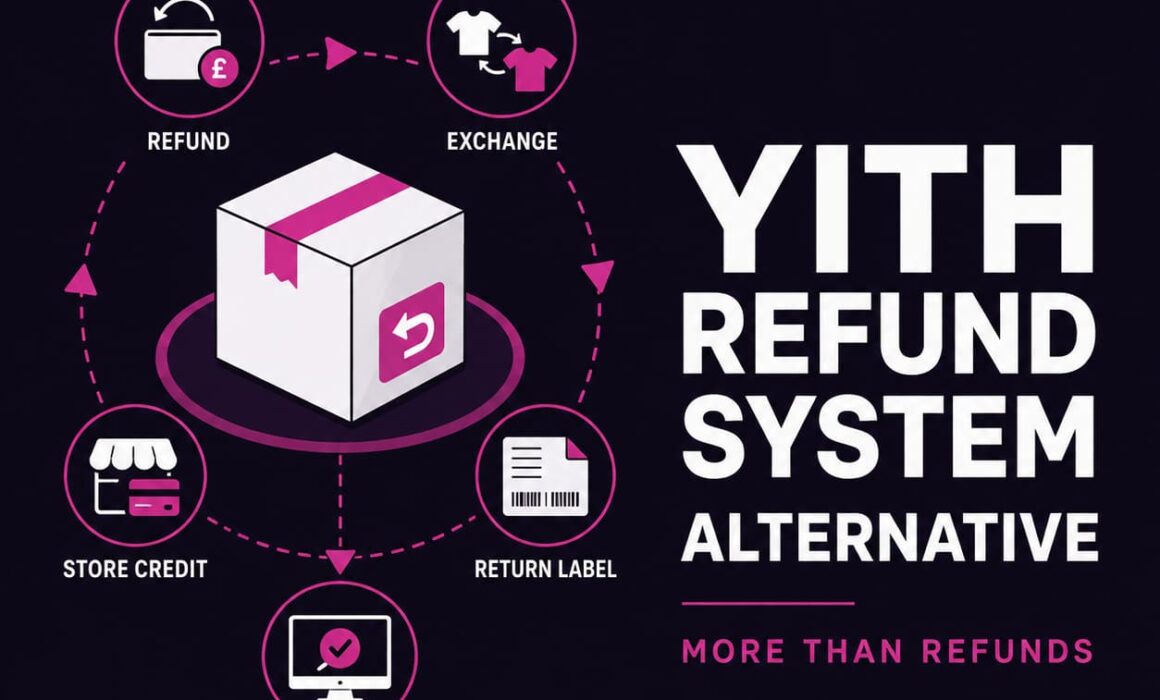
YITH Advanced Refund System Alternative for More Advanced WooCommerce Returns
Looking for a YITH Advanced Refund System alternative usually means your WooCommerce returns process has outgrown simple refund requests. The problem is rarely the actual act of sending money back to a customer. The difficult part is deciding whether an item is eligible, collecting the right information, offering an exchange, arranging the return, tracking what happens next and keeping your team informed without creating a trail of emails and manual notes.
For stores processing more than the occasional return, that operational layer matters. RMA Pro for WooCommerce approaches returns as a complete workflow rather than treating every request primarily as a refund.
Why look for a YITH Advanced Refund System alternative?
YITH Advanced Refund System provides a structured way for WooCommerce customers to request refunds. It supports requests for whole orders or individual products, configurable refund periods, manual or automatic request handling, partial quantities, customer messages, file attachments and coupons as an alternative to a monetary refund.
Those capabilities can be perfectly suitable when the main requirement is to improve the refund-request process.
The distinction appears when a store needs to manage what happens around the refund.
A physical ecommerce return might involve:
- determining whether the customer is eligible to return the item;
- checking the customer’s location and applicable return window;
- asking why the product is being returned;
- collecting photographs or other evidence;
- allowing different products from the same order to have different resolutions;
- offering an exchange instead of losing the sale;
- offering store credit;
- generating or charging for a return shipping label;
- tracking the returned parcel;
- confirming when goods arrive;
- deciding which products should actually be refunded;
- keeping an audit trail of the decisions made.
That is why choosing a returns plugin based only on its refund functionality can create problems later. A refund is one possible outcome of an RMA process. It is not necessarily the entire process.
YITH Advanced Refund System alternative: refund management vs return management
The most useful way to compare the two approaches is not to ask which plugin has the longest feature list. Ask what process you are trying to control.
If the requirement is primarily, “let customers ask us for a refund”, a refund-focused system may be enough.
If the requirement is, “give customers a structured way to return products and give our team control over every stage”, you are looking for an RMA or return management system.
| Requirement | Basic WooCommerce Returns Plugins | RMA Pro |
|---|---|---|
| Refund requests | Usually supported | Supported as part of the wider RMA workflow |
| Product exchanges | Often limited or outside the core workflow | Integrated exchange workflow |
| Store credit | Varies by plugin | Built into return resolution options |
| Return eligibility rules | Typically based on simpler conditions | Detailed rules covering customer, product, order, geography and return context |
| Different return windows by region | Not always available | Return windows can be controlled through return zones and rules |
| Return labels | May require separate workflow | Return label workflow with shipping integrations including Shippo |
| Request activity history | Varies | Dedicated activity log for RMA events |
| Mixed resolutions | May require separate handling | Designed for practical return workflows including exchanges and refunds |
The important difference is scope. RMA Pro is a WooCommerce returns and exchanges plugin designed to control more of the operational journey between a customer deciding they want to return something and the merchant actually completing the case.
A YITH Advanced Refund System alternative should handle exchanges properly
Refunding every valid return is operationally straightforward, but commercially expensive.
Imagine a customer orders two clothing items for £65 and £80. The £65 item is unsuitable and the customer wants their money back. The £80 product is the wrong size, but they still want the product.
A refund-first process encourages the business to think about the entire request in terms of money leaving the store.
A proper returns workflow can treat each item according to what the customer actually wants:
- Item one – refund;
- Item two – exchange for another variation.
The commercial difference matters. Instead of turning a £145 order into a £0 order, the store retains £80 of the original revenue while still solving the customer’s problem.
RMA Pro supports exchanges as a return resolution rather than forcing merchants to improvise around the refund workflow. That makes the administration easier for staff and gives customers a more logical experience.
Mixed returns are where basic workflows start becoming awkward
Real orders do not always fit neatly into “return everything” or “refund one item”. Customers might want to exchange one product, refund another and keep the rest.
The more of those decisions your team has to recreate manually using order notes or email, the greater the chance of mistakes.
A customer keeps a jacket, exchanges a shirt for another size and requests a refund for a pair of trousers. A return management system should preserve those different intentions rather than treating the order as one generic refund request.
For stores selling clothing, footwear, accessories or any product with common size and variation returns, exchange functionality can turn returns management into a revenue-retention tool rather than simply an administrative cost.
Store credit gives you another way to protect revenue
Not every customer wants an exchange. That does not mean the only remaining option should be a cash refund.
Store credit can be valuable when a customer still likes the business but has simply chosen the wrong product. Instead of returning £70 to their card and hoping they buy again later, you can resolve the return with £70 of store credit that remains available for another purchase.
The customer still receives value. The merchant keeps the spending relationship inside the store.
Where store credit makes commercial sense
Consider a customer returning a gift because the style is unsuitable. They do not know what they want instead today, so forcing them to select an exchange immediately creates friction.
Store credit gives them flexibility without automatically turning the return into lost revenue.
It is particularly useful for:
- fashion stores with frequent sizing or style returns;
- gift purchases;
- seasonal products;
- customers who intend to reorder but have not chosen a replacement yet;
- retention-focused customer service resolutions.
This is one reason a broader return management system for WooCommerce can be commercially different from software centred mainly on refund requests.
Return rules are where serious WooCommerce stores gain control
A customer-facing portal makes returns easier. Rules make them controllable.
Without rules, staff often make the same eligibility decisions repeatedly:
“Was this bought recently enough?”
“Was it discounted?”
“Does this product category have a different policy?”
“Is this customer eligible?”
“Does their country have a longer return window?”
Those decisions may sound small, but multiply them across hundreds of returns and they become a significant administrative burden.
RMA Pro allows stores to build default and custom return rules using conditions relevant to the order, product and customer. This means the policy can be enforced closer to the point where the return request is submitted.
Control high-risk customers without punishing everyone else
Return abuse is difficult because blanket restrictions often damage the experience for legitimate customers.
Suppose one customer has repeatedly generated costly returns or falls within a high-risk segment. You may want their available return options to differ without making every shopper follow the same restrictive policy.
A rules-based workflow lets the store apply stricter conditions where they are needed rather than redesigning the entire returns policy around exceptional behaviour.
Give valuable customers more flexibility
The same system can work in the opposite direction.
A VIP customer might receive a longer return period than the standard store policy. A merchant can therefore use return rules as part of its retention strategy rather than treating every shopper identically.
For example:
- Standard customers – 30-day return window;
- VIP customers – 45-day return window;
- specific clearance category – restricted eligibility;
- high-risk customer segment – additional limitations;
- specific product – different return conditions.
That is considerably closer to how established ecommerce businesses actually operate.
A YITH Advanced Refund System alternative should support regional return policies
International ecommerce makes a single global returns policy increasingly awkward.
A domestic return may reach your warehouse in one or two days. An international return could take considerably longer and may involve different logistics, carrier costs and customer expectations.
RMA Pro supports return zones that can be incorporated into return rules, allowing merchants to create different operational policies for different geographic groups.
Why return windows by zone matter
Imagine a UK-based store selling domestically and throughout Europe.
The business might decide that UK customers have a particular return window while customers in another return zone receive additional time because the outbound and return journeys are longer.
Without geographic flexibility, the store is forced either to make the policy unnecessarily generous everywhere or risk making it impractical for certain customers.
Zone-aware rules allow the policy to reflect how the fulfilment operation actually works.
The returns portal removes unnecessary customer service work
A large amount of returns administration begins before a return has even been created.
Customers email questions such as:
- “Can I return this?”
- “How do I send it back?”
- “Can I exchange it instead?”
- “What is happening with my return?”
- “Which order number do you need?”
Every manual conversation adds handling time.
A structured return portal moves more of that workflow into self-service. Customers can identify their order, choose eligible items, provide the reason for returning them, choose an available resolution and supply evidence where required.
That does not remove human judgement where it is useful. It removes the repetitive work required simply to collect information.
Better inputs create faster decisions
Consider a damaged product claim.
Without a portal, the first message may simply say, “My item is damaged. Can I return it?”
Your team replies asking for the order number and photographs. The customer answers later. Someone then has to match the correspondence to the order before deciding what to do.
When the workflow asks for the relevant information during the return request itself, the administrator is more likely to see a usable case from the beginning.
The commercial benefit is not just convenience. It reduces support time per return and can shorten the period during which a dissatisfied customer is waiting for an answer.
Return labels should be part of the workflow, not another disconnected task
Approving a return does not physically move the parcel back to you.
That sounds obvious, but it is an important difference between refund management and return management.
Once a return is approved, staff may otherwise have to move into another platform, create a label, copy customer details, send the label manually and then work out which shipment belongs to which return request later.
RMA Pro includes return-label functionality and integration with shipping services including Shippo, allowing the shipping stage to form part of the RMA workflow.
Depending on how the store wants to operate, return shipping can be structured around merchant-funded or customer-paid scenarios rather than assuming every return must have the same shipping arrangement.
Why customer-paid return shipping matters
Many businesses offer free returns for faults but expect customers to cover shipping for change-of-mind returns.
That policy becomes awkward if your software can only create a label at the merchant’s cost.
A more flexible workflow lets the return method reflect the commercial reason behind the return rather than requiring staff to calculate and recover costs manually afterwards.
Shipping integrations also reduce duplicated data entry. The more volume a store handles, the more valuable that becomes.
Tracking the return is different from issuing the refund
There is normally a period between “return approved” and “case complete”.
The parcel may be in transit. It may have arrived but still need inspection. The warehouse may have confirmed receipt while the customer service team has not yet completed the refund or exchange.
A useful RMA workflow therefore needs statuses that describe the operational reality of the case.
RMA Pro provides request stages including Pending, Approved, Received, Completed, Rejected and Cancelled. Tracking information can also be associated with supported return-label workflows.
That distinction prevents a common problem where a financial order status is expected to explain a logistics process it was never designed to represent.
Activity logs give your team a shared view of what happened
Returns become difficult to support when knowledge lives with individual staff members.
One employee approves the return. Another receives a customer call three days later. Someone in the warehouse has the parcel. A different administrator eventually processes the refund.
Without a clear history, the second or third person handling the case has to reconstruct what happened.
An activity log gives the RMA record its own timeline.
This becomes especially valuable when:
- multiple administrators manage returns;
- customer service and warehouse staff are separate;
- a customer queries a previous decision;
- tracking information needs to be checked;
- the business wants better accountability over return handling.
It also makes troubleshooting easier. Instead of relying on memory, the administrator has a record of the events associated with the request.
Automation becomes more valuable as order volume grows
A manual process can appear perfectly acceptable at low volume.
If a store receives five returns a month, manually checking the purchase date, emailing a label and typing a note into the order may not seem particularly expensive.
At 100 returns a month, the same workflow is very different.
Assume a manual return requires only eight minutes of avoidable administration. At 100 requests, that is more than 13 hours of staff time every month.
The objective of automation is not necessarily to approve every return without human involvement. It is to remove predictable decisions and repetitive data handling so staff spend their time on the cases that genuinely require judgement.
Rules can automate policy before staff become involved
If a product is outside its return window, the system should already know.
If a particular category is excluded, the system should already know.
If a customer’s status changes the available return terms, the workflow should apply that logic consistently.
This is where advanced return rules have a larger operational impact than they first appear to. They move policy enforcement away from individual judgement and into a repeatable process.
Why WooCommerce’s normal refund tools are not enough for a full RMA workflow
WooCommerce itself already provides refund functionality. Administrators can process full or partial refunds, with compatible payment gateways supporting automatic refunds to the original payment method.
That is useful financial functionality, but processing a WooCommerce refund is not the same as operating a returns department.
The core refund action does not answer questions such as:
- Why is the customer returning the item?
- Has the request been approved?
- Should an exchange be offered instead?
- Has the parcel been sent?
- Has the warehouse received it?
- Which return rule applied?
- Should this customer have a different return window?
- Who changed the return status?
- Should return postage be paid by the customer?
This is why dedicated return-management software exists alongside WooCommerce’s refund controls.
The refund transaction is the financial outcome. The RMA process manages everything needed to reach that outcome correctly.
When YITH Advanced Refund System may still be the right choice
A useful comparison should not pretend every store needs the most extensive system available.
YITH Advanced Refund System has a clear use case. Its current feature set provides structured refund requests, configurable refund deadlines, administrator approval or rejection, attachments, messaging, partial quantities and coupon alternatives.
If your primary objective is to give logged-in customers a better mechanism for requesting refunds, and your returns operation does not require extensive exchange, shipping or conditional RMA workflows, that approach may meet your needs.
RMA Pro becomes more relevant when the requirement has moved beyond managing refund claims.
| Your priority | What to look for |
|---|---|
| Primarily customer refund requests | A focused refund-request plugin may be sufficient |
| Refunds plus exchanges | A wider returns and exchanges system |
| Different policies by customer, product or region | Advanced conditional return rules |
| Keeping return revenue in the store | Exchanges and store credit |
| Managing physical return logistics | Return labels, tracking and dedicated RMA statuses |
| Scaling a busy returns operation | Rules, automation, activity history and centralised request management |
What to check before switching to a YITH Advanced Refund System alternative
Do not choose a replacement simply because it has more settings. Start with the problems your team actually experiences.
1. Count how many systems are involved in one return
If staff need WooCommerce, email, a shipping platform and a spreadsheet to complete one return, there is a strong case for consolidating more of that workflow.
2. Identify how many valid returns become refunds unnecessarily
If customers frequently repurchase a different size after receiving their refund, a native exchange workflow may help retain more of that revenue immediately.
3. Look at the exceptions your team manages manually
VIP customers, discounted products, particular countries, expensive items and high-risk customers are all examples of situations where one global return policy can become restrictive.
4. Examine return-shipping administration
If someone has to generate and email return labels separately, consider whether the shipping stage should be linked directly to the RMA.
5. Check how easily another employee can understand an existing case
If the answer depends on reading emails or asking the original administrator, stronger request records and activity logging can make the process more resilient.
Why RMA Pro is built for serious WooCommerce return operations
Returns become expensive when every request requires a member of staff to interpret policy, collect information and coordinate several systems.
RMA Pro is designed around reducing those operational gaps.
Instead of viewing a return only as a future refund, the workflow can consider the customer, the products, eligibility, return reason, requested resolution, shipping method, parcel status and final financial outcome.
Use return rules to determine which requests and resolutions are appropriate.
Offer exchanges and store credit instead of assuming every return must become a cash refund.
Collect return details through a structured portal and centralise RMA management.
Use return-label and tracking workflows rather than treating shipping as a separate task.
This approach becomes increasingly important as a WooCommerce store grows. What works with ten returns can become inefficient at 100, and what works with 100 can become extremely expensive at 1,000.
The objective is not simply to make returns easier for customers. It is to make them easier for the business to control.
Choose a YITH Advanced Refund System alternative that manages the whole return
If you only need a more structured way for customers to request their money back, a refund-focused plugin can remain a sensible option.
If your business needs to manage exchanges, store credit, conditional eligibility, different return windows, shipping labels, tracking, request statuses and the history behind each decision, the requirement is broader.
That is where RMA Pro differs.
It treats returns as an ecommerce operation with customer-service, logistics, fraud-control and revenue-retention consequences rather than simply as the step immediately before a WooCommerce refund.
For growing stores, that can mean fewer repetitive support tasks, more consistent enforcement of your policy, better visibility for staff and more opportunities to preserve the original sale through exchanges or store credit.
If you are comparing options because your current refund workflow no longer matches the way your business actually handles returns, take a closer look at RMA Pro for WooCommerce as an advanced returns system.